Making critical founder decisions often feels like standing at a crossroads with incomplete maps and uncertain weather. What if you could tap into a system that not only accelerates research but also mitigates the ever-present hallucination risk endemic to AI-assisted insights? Enter Suprmind, a promising multi-model AI orchestration tool that’s generating buzz alongside names like Microlaunch and GPT platforms.
In this post, we’ll dissect how Suprmind’s approach layers together multiple AI models to reduce error risk, the importance of adversarial evaluation, and how founders can incorporate this into their decision validation and risk registers. Spoiler: it’s not magic—there are caveats. But if you hate switch-heavy, copy-pasting workflows like I do, this might be an interesting tool to try before your next big move.
Why Founder Decisions Are Particularly Risky
For founders, making major decisions—be it https://stateofseo.com/can-ai-red-teaming-cover-regulatory-and-reputational-risks/ fundraising strategies, product pivots, market entry, or staffing plans—is a high-stakes balancing act. The risks extend beyond financial and operational: faulty assumptions and biased advice can cascade into missed opportunities or costly missteps.
One emerging support mechanism is AI-assisted decision tools, but that introduces another layer of risk: the dreaded hallucination risk.
Understanding Hallucination Risk in Business Decisions
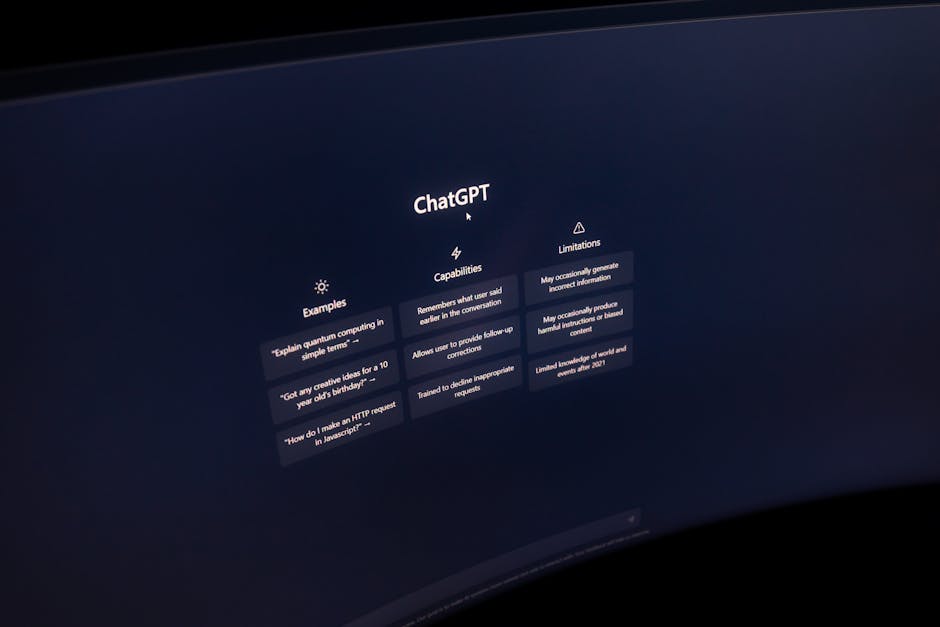
AI hallucination refers to when an AI model generates confident but factually incorrect or fabricated information. This is particularly dangerous in founder decisions because:
- False confidence: Decision-makers might take AI outputs as gospel despite inaccuracies. Opaque reasoning: Many models don’t provide transparent source references. Amplified errors: Initial faults can run unchecked, especially in single-model workflows.
This is why simply relying on one model (like GPT) for critical strategic advice can backfire.
What is Suprmind and How Does It Approach Multi-Model AI Orchestration?
Suprmind is a newer player in AI decision-support tools, designed with founder workflows in mind. Its core differentiator is multi-model AI orchestration—it doesn’t put all its eggs in one AI basket.
Instead, Suprmind integrates outputs from various specialized AI models, cross-checking responses to identify contradictions or hallucinations. Think of it like a panel of expert advisors from different perspectives, rather than a single oracle.
Key Features of Suprmind
- Integrated multi-AI pipeline: Combines GPT-like large language models with domain-specialized engines. Adversarial evaluation: Runs purposeful cross-questioning between models to detect inconsistent or dubious claims. Risk registers: Automatically flags recommendations with associated uncertainty and potential failure modes. Founder-friendly UI: Designed to avoid the copy-paste horror by presenting layered insights in one workspace.
By orchestrating these components, Suprmind aims to help founders surface more validated and trustworthy information before committing to a major decision.
How Does Multi-Model AI Help Mitigate Hallucination Risk?
Using multiple AI models to handle the same query or dataset introduces redundancy and cross-validation. Here’s why that matters:
Diversity of knowledge bases: Different models are trained on varied corpora and architectures; their errors typically do not overlap perfectly. Adversarial questioning: When models are prompted to challenge each other’s claims, spurious outputs are easier to flag. Aggregated confidence scores: Systems like Suprmind can weigh the consistency of responses to estimate reliability. Human-in-the-loop ease: Founders can quickly scan points of contention instead of blind trust or total rejection.In contrast, relying on a single GPT-based model or a Microlaunch-style rapid prototyping AI platform might speed up research but still leaves hallucination risks largely unaddressed—something worth pondering before your next runway-extending decision.

Incorporating Suprmind into Your Decision Validation Framework
Suprmind doesn’t just spit out answers—it helps founders build a visible risk register as part of the decision-making workflow. Here’s a simple recipe to integrate it:
1. Define Your Decision Context
Start by framing the decision—clear goals, key unknowns, and stakeholders involved. This primes the AI orchestration to focus on relevant data.
2. Run Multi-Model Queries
Use Suprmind to generate insights from multiple AI models simultaneously, asking not just “What should I do?” but also “What are the risks?” and “What could go wrong?”
3. Review Conflict and Consistency Reports
Check where AI outputs agree or diverge. Pay particular attention to any flagged hallucinations or contradictions the tool highlights through adversarial evaluation.
4. Update Your Risk Register
Document identified risks, uncertainty levels, and mitigation strategies suggested by the AI ensemble. This becomes part of your formal decision validation artifact.
5. Make Incremental Decisions with Confidence Levels
If the orchestration still shows high uncertainty or hallucination risk, it’s a signal to gather further data or delay irreversible moves. Conversely, strong consensus might warrant faster execution.
Comparing Suprmind, Microlaunch, and GPT for Founder Use
Feature / Tool Suprmind Microlaunch GPT (Single Model) Multi-model AI orchestration Yes; core to platform No; focused on speed and prototyping No; single model Hallucination risk management Adversarial evaluation and risk flags Minimal; relies on user validation Limited; prone to confident errors Decision validation support Includes risk registers and uncertainty tracking Basic; rapid testing focus None; raw text generation Designed for founders Yes; workflow optimized Primarily for product teams General-purpose API Interface and workflow Unified dashboard; no tab-switching Fragmented; external tools needed Varies by implementationIs Suprmind Worth Trying Before Your Next Big Founder Decision?
Bottom line: If you’re a founder making an impactful decision with limited data and high uncertainty, the value of reducing hallucination risk can be huge. Blind trust in a single AI model may lead to overconfident errors that literally cost you your startup’s trajectory.
Suprmind’s multi-model approach, adversarial evaluation, and risk register integration offer a tangible step toward smarter AI-assisted decision-making. It won’t eliminate risk entirely—no tool does—but it helps you identify where you should be skeptical rather https://bizzmarkblog.com/who-made-suprmind-unpacking-the-vision-behind-multi-model-ai-orchestration/ than blindly optimistic.
Having tested many AI workflows over the past three years, I appreciate Suprmind’s emphasis on:
- Minimizing costly tab switching and copy-paste inefficiencies Surfacing contradictions so you can interrogate AI outputs rather than swallowing them whole Embedding the uncertainty layer directly into decision validation, not as an afterthought
That said, founders should still apply critical judgment. Ask yourself: What would I bet my job on here? If the AI ensemble can’t provide a clear, low-hallucination signal with corroboration, it may simply highlight that more real-world data or expert consultation is needed.
Conclusion
For ambitious founders, tools like Suprmind represent an intriguing evolution in AI decision support—bridging the gap between raw AI outputs and actionable, validated insights. Its multi-model AI orchestration and adversarial evaluation mechanisms provide a more robust guardrail against hallucination risk than single-model platforms like GPT.
While it’s not a silver bullet, using Suprmind to augment your decision validation and risk registers before making a big move can be a wise step—especially if you want to avoid costly errors hidden by confident-sounding AI hallucinations.
So, is it worth trying before your next big decision? If you value reducing blind spots without drowning in tab switching or fragmented workflows, the answer leans strongly toward yes.